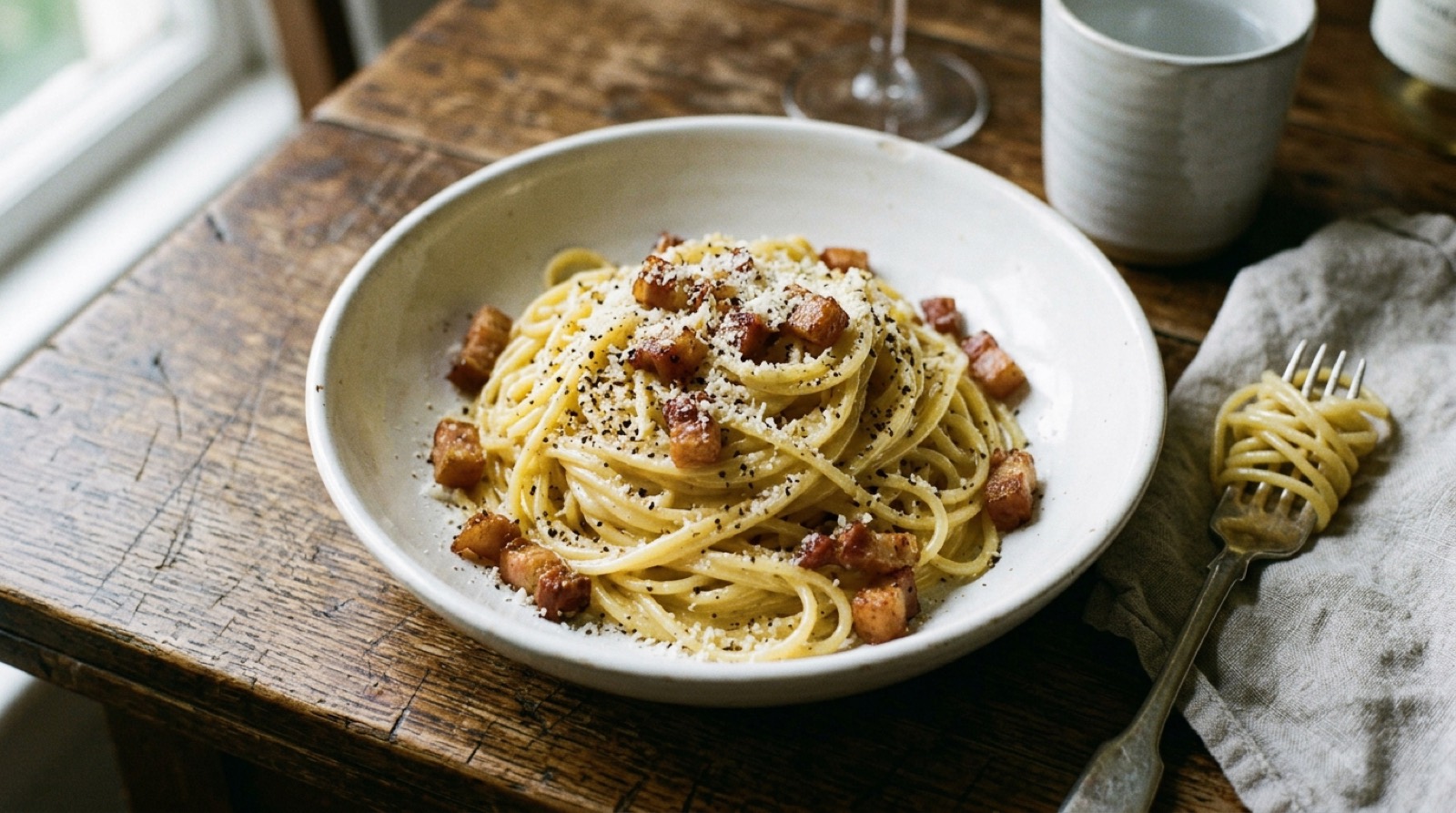
Authentic Spaghetti Carbonara: A Taste of Roman History
Spaghetti Carbonara. The name itself conjures images of Roman trattorias, bustling kitchens, and the satisfying slurp of perfectly coated pasta. This iconic dish, with its deceptively simple list of ingredients, has a rich and debated history. Some believe it originated as a hearty meal for Italian coal miners ("carbonari"), while others suggest it evolved as a response to the American introduction of bacon and eggs to post-war Italy. Regardless of its precise origin, Carbonara has cemented its place as a beloved classic.
The beauty of Carbonara lies in its minimalist approach. It's not about fancy sauces or complex techniques. It's about using high-quality ingredients and executing the cooking process with precision to create a symphony of flavors and textures. The creamy sauce, achieved without a single drop of cream, is a testament to the power of emulsification. The salty, crispy pork, the sharp bite of Pecorino Romano, and the perfectly cooked spaghetti combine to create a dish that is both comforting and utterly satisfying. Forget the jars of pre-made sauce – this is the real deal, and it's surprisingly easy to make at home. This recipe walks you through each step to achieving the perfect Carbonara every single time. Get ready to impress your friends and family with this timeless Italian masterpiece!
The Key Ingredients: A Deep Dive
Before we dive into the cooking process, let's take a closer look at the star players in our Carbonara symphony:
- Spaghetti: While other pasta shapes can be used, spaghetti is the traditional choice. Its long strands perfectly capture the creamy sauce, ensuring every bite is packed with flavor. Use a high-quality spaghetti, preferably bronze-die extruded, for a better texture that holds the sauce well.
- Guanciale (or Pancetta): This is where things get serious. Authentic Carbonara requires guanciale, cured pork cheek, for its unique flavor and texture. Guanciale has a richer, more intense flavor than pancetta, and it renders beautifully, creating a flavorful fat that is essential for the sauce. If you can't find guanciale, pancetta is a reasonable substitute, but avoid bacon, which has a smoky flavor that doesn't belong in Carbonara.
- Eggs: Eggs are the heart of the carbonara sauce. They provide richness and creaminess. Use fresh, high-quality eggs for the best results. The yolks are the most important part, contributing to the sauce's velvety texture.
- Pecorino Romano Cheese: Forget Parmesan! Authentic Carbonara calls for Pecorino Romano, a hard, salty cheese made from sheep's milk. Its sharp, tangy flavor complements the richness of the eggs and pork. Grate it finely for even distribution in the sauce.
- Black Pepper: Freshly ground black pepper is crucial for adding a spicy kick and aromatic depth to the dish. Use a generous amount, as it plays a significant role in the overall flavor profile.
Step-by-Step Instructions: Mastering the Carbonara
Now, let's get cooking! Follow these simple steps to create a perfect plate of Spaghetti Carbonara:
- Cook the Spaghetti: Bring a large pot of salted water to a rolling boil. Add the spaghetti and cook according to package directions until al dente. Reserve about 1 cup of pasta water before draining. The starchy pasta water is key to achieving the creamy sauce.
- Render the Guanciale (or Pancetta): While the pasta is cooking, dice the guanciale (or pancetta) into small cubes. Heat a large skillet over medium heat. Add the guanciale (or pancetta) and cook, stirring occasionally, until it is crispy and golden brown. Remove the guanciale from the skillet and set aside, but do not discard the rendered fat in the pan. That fat is liquid gold!
- Prepare the Sauce: In a large bowl, whisk together the eggs, grated Pecorino Romano cheese, and freshly ground black pepper. Whisk until smooth and well combined. This is your carbonara sauce base.
- Combine and Emulsify: Drain the spaghetti and immediately add it to the skillet with the rendered guanciale fat. Toss to coat the pasta with the flavorful fat.
- The Crucial Step: Remove the skillet from the heat. This is the most important part! Quickly pour the egg and cheese mixture over the hot pasta, tossing constantly and vigorously to prevent the eggs from scrambling. The heat from the pasta will gently cook the eggs, creating a creamy sauce. Add a little of the reserved pasta water at a time, tossing continuously, until the sauce becomes creamy and coats the pasta evenly. This is where the magic happens!
- Finish and Serve: Add the crispy guanciale (or pancetta) to the pasta and toss to combine. Serve immediately, topped with extra Pecorino Romano cheese and freshly ground black pepper. Enjoy!
Common Carbonara Mistakes (and How to Avoid Them)
- Scrambled Eggs: This is the most common Carbonara disaster. Avoid it by removing the skillet from the heat before adding the egg mixture and tossing continuously. Adding the pasta water gradually helps to control the temperature and prevent the eggs from curdling.
- Using Cream: Authentic Carbonara never includes cream. The creamy texture comes solely from the eggs, cheese, and pasta water.
- Overcooking the Pasta: Overcooked pasta will become mushy and won't hold the sauce well. Cook the spaghetti al dente, which means "to the tooth," or slightly firm to the bite.
- Using Parmesan Instead of Pecorino Romano: While Parmesan is a delicious cheese, it's not the right choice for Carbonara. Pecorino Romano has a sharper, saltier flavor that is essential to the dish's authenticity.
- Not Using Enough Black Pepper: Black pepper is a key ingredient in Carbonara, adding a spicy kick and aroma. Don't be shy!
Serving Suggestions: Completing the Meal
Spaghetti Carbonara is a rich and satisfying dish on its own, but here are a few serving suggestions to complete the meal:
- A Simple Salad: A light and refreshing salad with a vinaigrette dressing will balance the richness of the pasta. Consider a simple arugula salad with lemon vinaigrette.
- Garlic Bread: Crispy garlic bread is always a welcome addition to any pasta meal.
- A Glass of Wine: A crisp, dry white wine, such as Pinot Grigio or Vermentino, will complement the flavors of the Carbonara perfectly.
- Start with an Antipasto: A selection of cured meats, cheeses, and olives makes a wonderful appetizer to start the meal.
Enjoy your homemade Spaghetti Carbonara! It's a dish that is sure to impress and become a new favorite in your kitchen. Buon Appetito!