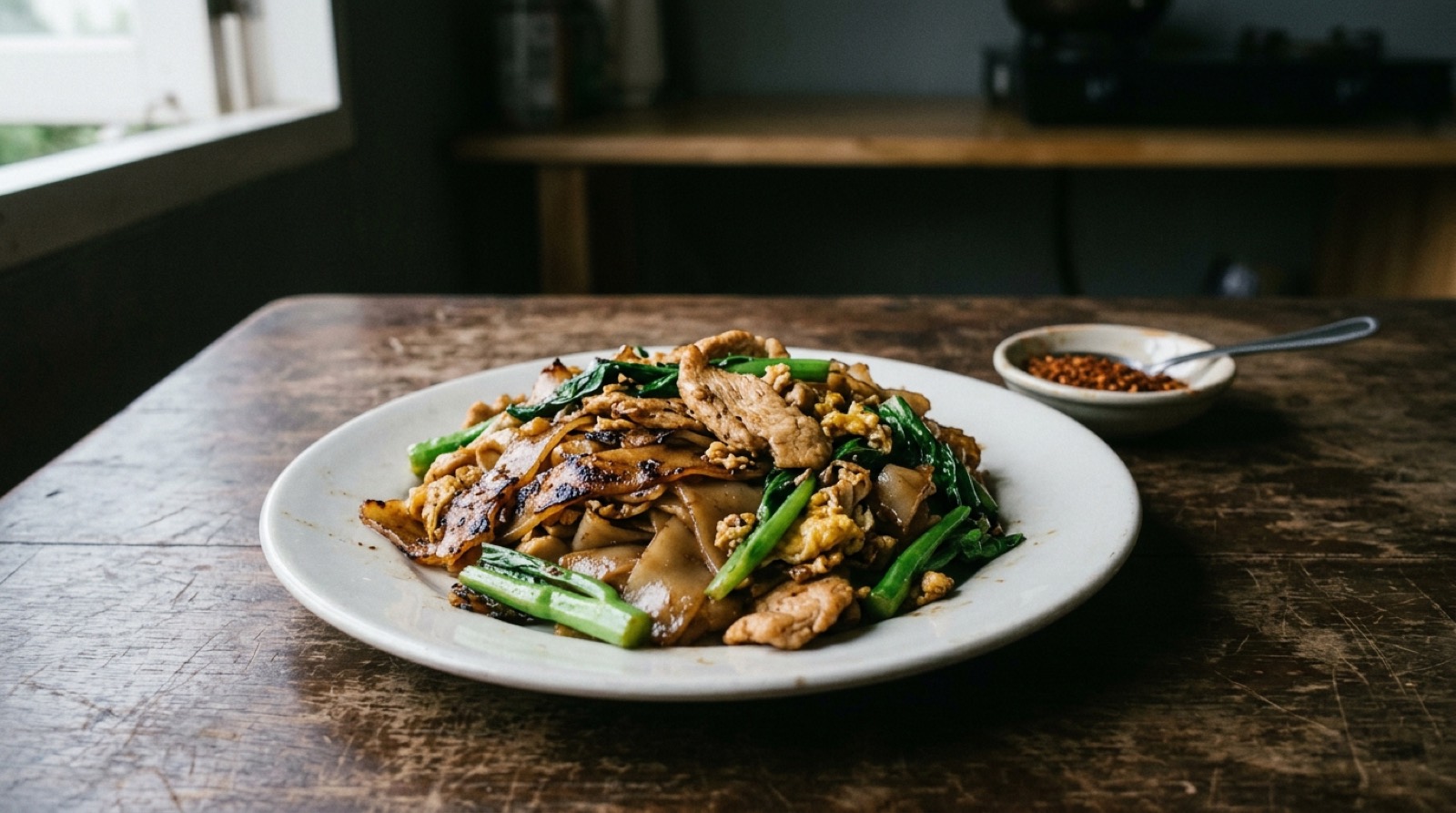
Pad See Ew (Thai Stir-Fried Soy Sauce Noodles)
The smoky, savory, comforting street food classic that rivals Pad Thai
The Soul of Thai Street Food
While Pad Thai gets all the international fame, Pad See Ew (literally "stir-fried soy sauce") is the comfort food champion of Thailand. Walk down any street in Bangkok, and you'll hear the rhythmic clanging of a metal spatula against a seasoned wok, smelling the unmistakable aroma of caramelizing soy sauce and charred noodles.
Unlike the sweet-tart-nutty profile of Pad Thai, Pad See Ew is savory, rich, and deeply satisfying. It relies on a few high-quality ingredients and one crucial technique: high heat.
The Secret Ingredient: "Wok Hei"
The defining characteristic of great Pad See Ew is wok hei—the "breath of the wok." It's that elusive smoky flavor achieved when oil and soy sauce hit a blazing hot metal surface.
How to Achieve Wok Hei at Home:
- Don't Overcrowd: Cook in small batches (1-2 servings max). If you crowd the pan, the noodles steam instead of fry.
- Max Heat: Turn your burner to the highest setting.
- The Pause: Let the noodles sit undisturbed for 15-20 seconds during the final tossing stage. You want them to catch and char slightly on the bottom.
Ingredient Deep Dive
1. The Noodles (Sen Yai)
You need fresh, wide rice noodles. They come in folded sheets or pre-cut bags in the refrigerated section of Asian markets.
- Pro Tip: If they are cold and hard, do not try to pull them apart—they will shatter. Microwave the whole block for 30-60 seconds until they are warm and soft, then peel them apart.
2. The Soy Sauce Trinity
Pad See Ew uses a specific blend:
- Dark Soy Sauce: Thick, molasses-like, and slightly sweet. This gives the dish its dark color and caramel flavor. (Healthy Boy brand is the standard).
- Oyster Sauce: Provides the savory umami backbone and rich mouthfeel.
- Light/Regular Soy Sauce: Adds the saltiness.
3. Chinese Broccoli (Gai Lan)
This leafy green has thick, crunchy stems and slightly bitter leaves that cut through the richness of the noodles.
- Substitute: Broccolini or regular broccoli (stems sliced thin) work well if you can't find Gai Lan.
Step-by-Step Technique
Prep is Everything
Stir-frying happens fast. Once the heat is on, you won't have time to measure sugar or peel garlic. Have everything chopped, mixed, and ready in bowls next to the stove (mise en place).
The Sequence
- Protein First: Sear it and remove it. This prevents it from overcooking while you wrestle with the noodles.
- Vegetables & Aromatics: Brief fry to release flavor.
- Egg: Scramble it in the pan so it stays distinct, not a mushy coating.
- Noodles & Sauce: The final assembly. Gentle tossing to coat, then high heat for the char.
Common Mistakes
- Breaking the Noodles: Rice noodles are delicate. Use a folding motion rather than aggressive stirring. A wide spatula or tongs work best.
- Soggy Dish: Usually caused by washing the noodles (don't!) or overcrowding the pan.
- Bland Flavor: Don't skimp on the sugar. It's necessary to balance the salty soy sauces and help with caramelization.
Serving Like a Local
In Thailand, Pad See Ew is served with a "condiment caddy" (Kruang Prung) so you can adjust the flavor to your liking:
- Chili Vinegar (Nam Som Prik Dong): Sliced chilies in vinegar. Adds acidity to cut the fat.
- Dried Chili Flakes (Prik Bon): For heat.
- Sugar: Some Thais add a sprinkle of sugar on top for extra balance.
- Fish Sauce: If you need more salt.
Ready for more Thai classics? Try our Thai Green Curry or explore our Asian Recipe Collection.